Through the Americans Helping Americans® Want2Work (W2W) initiative, our partner career and technical education schools throughout Appalachia receive grants that are awarded to the schools to purchase required items such as nursing scrubs, welding helmets, automotive diagnostic tools and other types of professional equipment, as well as cover the costs of certification tests and any other miscellaneous expenses that are creating barriers to students pursuing a career path.
This year, Americans Helping Americans® is awarding a total of $105,654 in grants to six area technology and career and technical centers in Georgia, Kentucky and Virginia, benefiting hundreds of students for the 2026-2027 school year.
Estill County, Kentucky, Area Technology Center
The mission of the Estill County Area Technology Center (ATC) is to empower students by providing them with cutting-edge technical education that cultivates a dynamic learning environment, promotes teamwork, instills success-driven values and enhances employability skills that equip students with the tools they need to discover and excel in rewarding careers.
The Estill County ATC serves two rural high school districts in Eastern Kentucky, Estill and Powell counties, offering technical training to students in six program areas: Diesel, Welding, Engineering, Industrial Maintenance, Computer Science and Health Science, with 11 pathway options.
For the 2026-2027 academic year, principal Tammy Combs expects that approximately 200 students will benefit from the $20,000 in Americans Helping Americans® Want2Work (W2W) grant funding the ATC will receive this year.
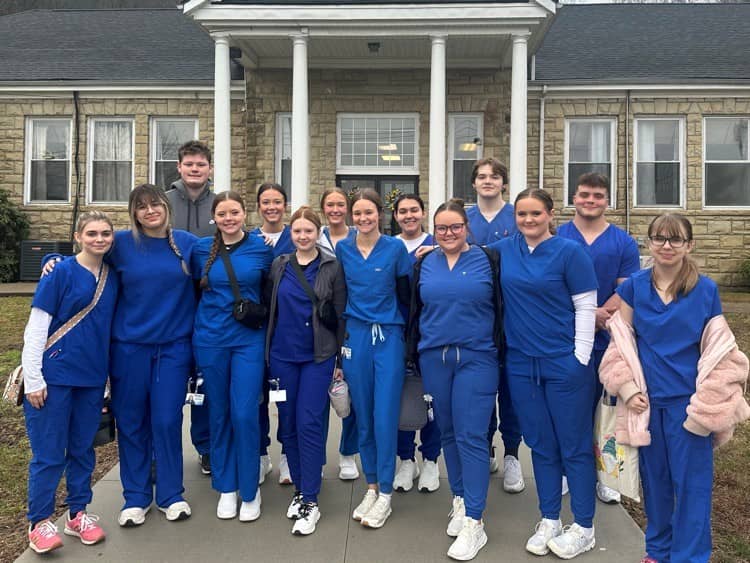
For example, for Health Science students taking the Pre-Nursing Pathway, which prepares them for admission to a professional program in nursing, students must meet the clothing requirement of their partner’s health care facility.
Principal Combs reported that W2W funding will be used to purchase a pair of scrubs, a watch with a second hand and a pair of shoes for each student in the Pre-Nursing Capstone class.
“All senior Health Science students that complete an industry certification will receive supplies to assist them as they enter employment or post-secondary education to assist them and lessen their burden and decrease barriers to their future, she told us, adding that the funds will be spent on the 25 seniors in the Health Science program who do not have the financial support to purchase the required items for themselves.
“I think with leveling this with funds to make sure that all students are supported will decrease this barrier and encourage students to take the classes that will secure their future and allow them to be contributing members of society and the community.”
Greenup County, Kentucky, Area Technology Center
Greenup County, Kentucky, ATC principal Stacey Thompson says their mission “is simple: to bring innovation and life-changing experiences to our students, altering the trajectory of their futures while providing them with the tools to thrive.
“As a Career and Technical High School, we are dedicated to preparing young people for meaningful futures by offering skill training and industry-recognized certifications in welding, automotive, electricity, agriculture, business & marketing and healthcare.”
For example, the ATC’s Agriculture Program has multiple pathways for students to earn college credit as well as career ready certifications in Agricultural Power, Structural, Technical Systems, Animal Sciences, Environmental Sciences & Natural Sciences and Plant Science Systems.
Principal Thompson noted that the Agricultural Power, Structural, Technical Systems pathway is built on the application of concepts and technology in engineering, hydraulics, pneumatics, electronics, power, structures and controls to the field of agriculture.
In sum, “Students design agricultural structures, machinery and equipment while utilizing safe operation and maintenance practices,” she explained.
“Within our agriculture program, our students need specialized gloves, hard hats and eye protection to complete the hands-on, technical components of our certifications and skills attainment. Students are using power tools, saws, lawn tools, etc., to build, repair and create.”
She also wants the supporters of the Americans Helping Americans® Want2Work program to know “Your investments truly made a HUGE IMPACT on the lives and futures of our students, staff and community during 2025-2026 as our seniors graduated with work-ready tools, personal protection equipment, and certifications making them competitive and setting them apart from their same-aged peers.
“What a legacy Americans Helping Americans® has created!”
And upon receiving confirmation from Americans Helping Americans® executive director Cameron Krizek that the Greenup County ATC would be receiving a W2W grant again for the second year in a row, Principal Thompson stated:
“We are so grateful for another opportunity to partner with Americans Helping Americans® for our students and programs!
“What a blessing this grant was during our 25-26 school year!
“We look forward to investing in our young people with Americans Helping Americans® during 26-27!
“Again, a HUGE THANKS for investing in our young people, school and community!”
Lee County, Kentucky, Area Technology Center
Lee County Area Technology Center is a secondary career and technical education center serving students from the Lee, Wolfe, and Owsley County high schools in rural eastern Kentucky, offering programs in healthcare, construction, welding, automotive and business.
Principal Rachel Miller says that with the $20,000 in W2W grant funding the school will receive this year they will be able to provide support to 40 health science students, 20 welding students, 30 construction students, 15 automotive students and 15 business students, for a total of 120 students with tools and equipment, as well as provide career exposure across programs. Additional students will be impacted through CTSO (Career and Technical Student Organization) support in uniform and competition supplies for a total of up to 175 students.
For example, the automotive program pathway provides students with access to the knowledge, skills and tools needed to pursue careers in the transportation and automotive service industry.
Grant funds will be used to purchase personal, advanced automotive tools for students enrolled in the program, said Principal Miller.
“These tools will allow students to practice industry-standard skills, complete diagnostic and repair tasks, and prepare for entry-level employment in the automotive field. Funds will also support the purchasing of required uniform and equipment needs for leadership development and competitive events through SkillsUSA,” she told us.
The automotive program primarily serves freshman – seniors from all three feeder school districts (Lee, Wolfe, and Owsley), serving a total of around 40 individual students annually.
“The automotive industry is rapidly evolving with increasing technological advancements, requiring students to gain both hands-on experience and familiarity with modern diagnostic equipment.”
She went on to explain, “Many of our students are first-generation career or college seekers, and a significant number face challenges such as food insecurity, limited access to technology at home and financial constraints that can prevent participation in certifications, clinical experiences, or lab-based instruction without school support.
“As a result, our mission extends beyond skill development to ensuring equity of access—providing certifications, hands-on training, CTSO engagement, and industry partnerships that students would not otherwise be able to obtain.
“In this context, every program is intentionally designed to remove barriers and prepare students to enter high-wage, high-demand careers while strengthening the economic future of our rural community.”
Lee County, Virginia, Career and Technical Center
“Your support has made such a difference for our nursing students during the 2025-2026 school year and the previous two years,” stated Lee County Career and Technical Center (CTC) program director Sherry Allen in a June 2026 letter to Cameron.
“We have been blessed to receive this grant!”
The Lee County CTC operates a Practical Nursing (PN) program, which accepts both high school seniors and adult students in the 18-month practical nursing program.
The mission of the CTC’s PN program is to create a safe, educational environment to enable all students to achieve quality academic, technical, employability and life skills for a smooth transition into post-secondary schools, the world of work and for continuing lifelong learning.
The program offers instruction in the following areas: Success in Practical Nursing, Anatomy and Physiology, Growth and Development Across the Life Span, Fundamentals of Nursing including Nutrition, Geriatrics, Dosage Calculations, Medical-Surgical Nursing, Pharmacology, Pediatrics, Maternity, Mental Health and Leadership.
Sherry noted that the student’s complete 400+ hours of clinical experience in various sites in the community, and additionally, the students sponsor two blood drives each year and participate in many community events throughout the county.
She stated that “the program has been a valuable asset to our community for 57 years, accepting up to 10 high school seniors and 30-35 adults into the program every year.
The W2W grant would be used primarily to pay tuition for students who have the greatest need, she told us.
Grant funds would be used to offset required NCLEX (National Council Licensure Examination) examination fees ($200) and nursing licensure fees ($170) for the graduating students. Funds may also support additional program-related costs such as textbooks, uniforms, and supplies.
“Many of our students are financially challenged adults who are balancing employment, family responsibilities, and their education,” Sherry explained.
The high school students in the program also work part-time jobs after school.
However, “while the high school students pay only limited expenses during the first year of the program, they are responsible for all expenses during the second year, creating a financial burden.”
Sherry said that 55 students had enrolled for the 2026-2027 academic year, but without adequate funding, they would face great financial strain during the course of the program.
“This would likely lead to a loss of many students and decreased enrollment.
“Given the ongoing nursing shortage in our area, reduced program participation would further burden an already strained healthcare workforce and increase safety risks for many patients.”
Tazewell County, Virginia, Career and Technical Center
The Tazewell County CTC “is geared mainly towards preparing students for a job and life after high school other than college,” notes CTC masonry instructor Robert Steele.
Robert notes that the CTC has 9 main programs including Auto body, Nursing/Medical Administration, Welding, Masonry, Automotive/Diesel, Criminal Justice/Law, Education/Vocational training, Carpentry and Cosmetology.
For example, in block and masonry, Robert explained that students focus on problem-solving and employability skills while performing hands-on, entry-level brick and block masonry tasks.
“Students also learn to use hand tools, measuring tools, power tools and lifting equipment that masons use on the job,” said Robert, adding that they also have the opportunity to earn their OSHA-10 safety credentials during Masonry I.
“Students will then complete more advanced projects laying masonry units (brick and block), differentiating and selecting mortar, applying mathematical concepts and interpreting blueprints used in masonry.”
Students are also provided with advanced instruction in all areas as they prepare for industry certification examinations.
Additionally, “masonry students are taken into the community working in partnership with local businesses and organizations to give them hands-on real-life experience in the masonry field with incentives.”
Robert noted that some students will qualify to participate in national competition. In the first year Americans Helping Americans® provided a W2W grant to the school, one of its students placed 10th in the nation.
“No one can count how many other proud young, accomplished adults we will have all because someone decided to take a chance on them,” says Robert.
“One thing is for certain; we are proud of the students and what they accomplish, and your help makes it possible!”
White County, Georgia, High School
“Your generous support during the 2025-2026 school year had a profound impact on our students, many of whom would not have had access to the resources necessary to pursue vocational success without your assistance,” reported Kathy London, work-based learning coordinator of the White County High School CTAE (Career Technical and Agricultural Education) program.
The CTAE program’s “Tools for Tomorrow” special project supported by Americans Helping Americans® is designed to provide between 50 and 75 students with the items they need to successfully complete their coursework.
“With your help, we hope to provide essential tools, clothing, equipment and industry certifications – resources that remove barriers and open doors to meaningful employment for our students after graduation,” Kathy told Cameron in her grant request for the 2026-2027 academic year.
“Our mission is to prepare students for rewarding and financially sustaining careers,” she stated.
“Many of our seniors apply to technical college with intentions of becoming welders, HVAC technicians, etc.
“But many of those students do not matriculate simply because they cannot afford the tools, clothing and equipment necessary for their chosen profession, so they give up.
“I want to eliminate the financial burden of seeking a vocational career.”
The CTAE program offers students several pathways to choose from, including: Forestry, Ag Mechanics, Horticulture, Veterinary Science, Welding, Cosmetology, Healthcare Science, Entrepreneurship, Graphic Design, Industrial Mechanics, Audio Visual Production and JROTC.
“Our students are well prepared for vocational careers when they leave our school,” said Kathy.
“However, hurdles prevent our students from following through with careers in these vocational areas.
“The hurdles are mostly financial. Students simply can’t afford the clothing, tools, shoes, certifications, application fees, etc. to make their dreams a reality.”
She noted that her goal “is to help our students who will work and want to work but simply don’t have the tools to reach their goals.”
For example, she told us of a student who desires to be a diesel mechanic but can’t afford the tools needed to do the job.
“Without these tools, he can’t have the career he wants nor receive the education he needs to do so.
“It’s an unfair system.”
Another is a healthcare student who is scheduled to intern in a hospital emergency room.
“She needs scrubs at the very least, but she can’t afford them,” Kathy told us.
“She will be an amazing nurse someday, but a simple pair of scrubs could stop her from pursuing her dream.”
With the $10,000 W2W grant from Americans Helping Americans®, Kathy says she could assist 50 students with items they need, not to exceed $200 each.
“That would be amazing!”
She explained that the grant funding will open opportunities to help more students who are embarrassed to ask for help.”
“This grant has the potential to break generational cycles of poverty within our community by equipping young people with the skills and confidence they need to succeed.”